Diamond
Mine
I had the opportunity to
visit the
Kimberlite deposits and diamond
mine
that are in the eastern part of Elliott County with a group of seventh
graders.
Diamonds
are often
found in Kimberlite.
Kimberlite is formed as semi liquid magma from deep in the earth's
mantle forces its way up through the mantle and then the
crust.
As
it moves through the rocks above it chunks break off and are mixed
in.
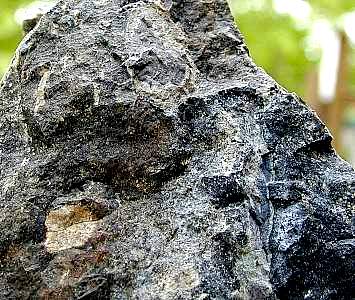
The first picture shows the dark black/grey Kimberlite and several
lighter
colored inclusions (xenoliths). Other minerals are
formed
from
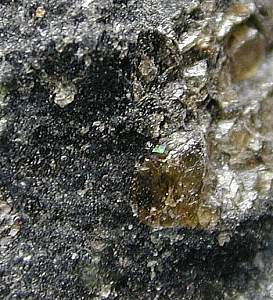
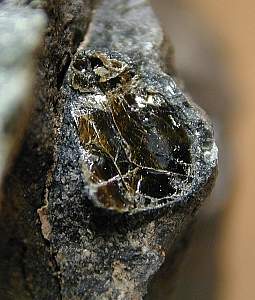
the elements found in the mantle. The other pictures show a
piece
of translucent yellow/brown/green olivine and a bit of dark brown/black
mica that are common in this Kimberlite. Other minerals that
have
been found include: garnet, tourmaline, hornblende, magnetite,
ilmenite,
chromite, titanite, rutile, actinolite, staurolite, quartz, feldspar,
zircon,
topaz, monazite, xenotime, and fluorite.
]
In
Arkansas at the
Crater of Diamonds
State Park you can still find
diamonds that were left in the soil formed by the breakdown of
Kimberlite.
And of course Kimberlite is named from the famous diamond bearing
deposits
in South Africa where most of the world's diamonds are mined.
Unfortunately according to the University of Kentucky no diamonds have
ever been authenticated from the Elliott County deposits.
But several people have told me of friends or relatives that found
diamonds ranging in size from a walnut to a fist.
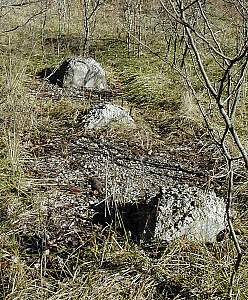
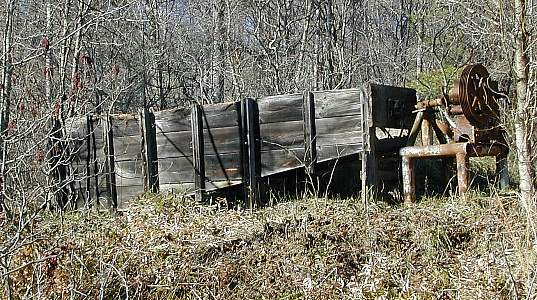
Here is
some of the
equipment left by
the Kentucky Kimberly Diamond
Company which operated here starting in 1906.
The mining operation started with excavated rock and soil being passed
through a crusher of which only the foundation remains.
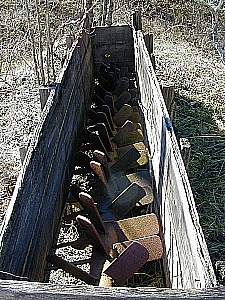
The
crushed rock and
soil were then
mixed with water in the device pictured
below to make it easy to separate the very fine material from the rest.
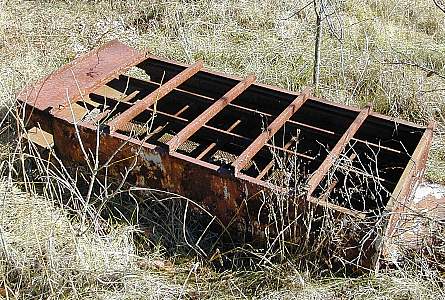
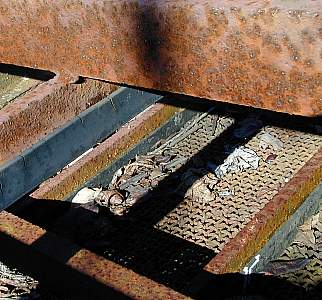
The
resulting slurry
was then passed
through the screening box where
it is separated into course, fine, and very fine fractions.
Today
the output
from the screening
process would be passed through
an X-ray fluorescence sorting process to separate the diamonds from
residual
waste.
Back then the sorting was done by hand.
As they
came to the
site the students
had high hopes of finding a diamond
that would make them rich.
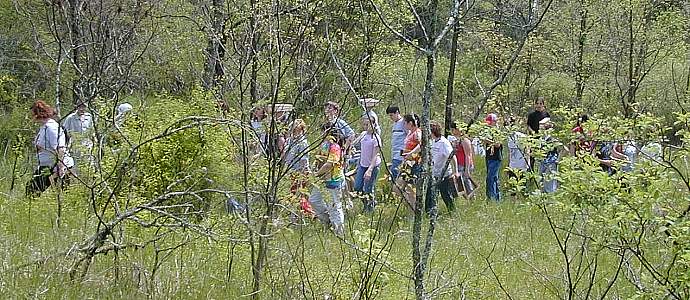
They
set to work
sifting through the
gravel along the stream bed. Some
waded right in.
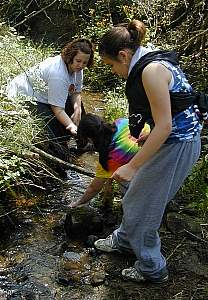
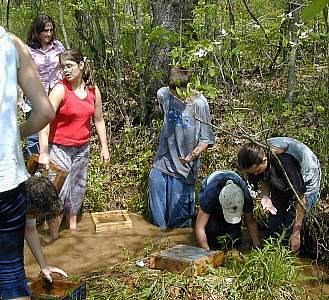
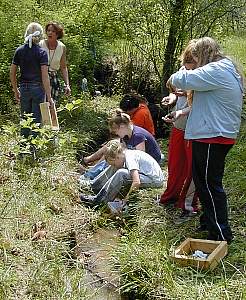
While
none of the
students found
diamonds (not that they told me about
anyway) they all learned a bit of the history of the county and a bit
of
geology.
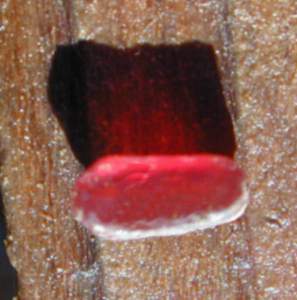
What they did find were Garnets. Most found a few, one
student
found 9 another 15.
Here are three that were found in the stream.

Go
to our Science
Fun page
Go to our Travels page
Go
to our Personal
home page
Go
to our Community
page
E-mail Nancy
and
Alan